



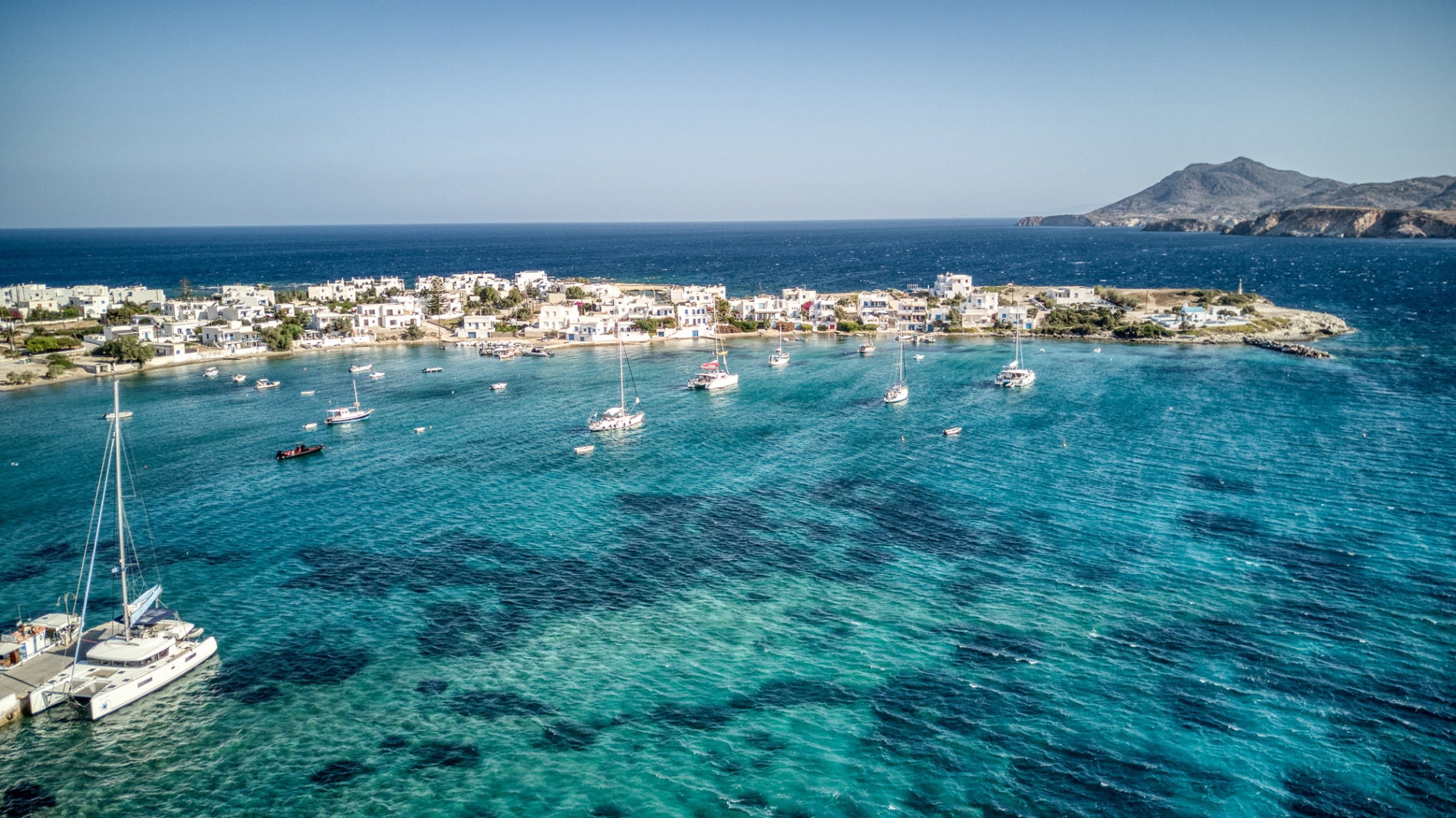
Pollonia is the island’s second port after the port of Adamantas. Possibly, it was named after the temple of Apollo that existed on the Lighthouse of Pelekouda (on the left side of the settlement).
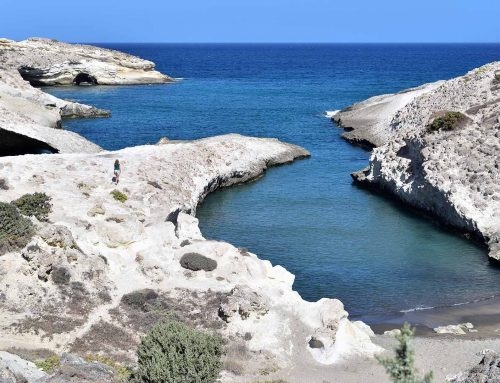
Kapros
Kapros is easily accesible by car and bus and visible from the main road that leads to Pollonia.
Source: Municipality of Milos
Sarakiniko
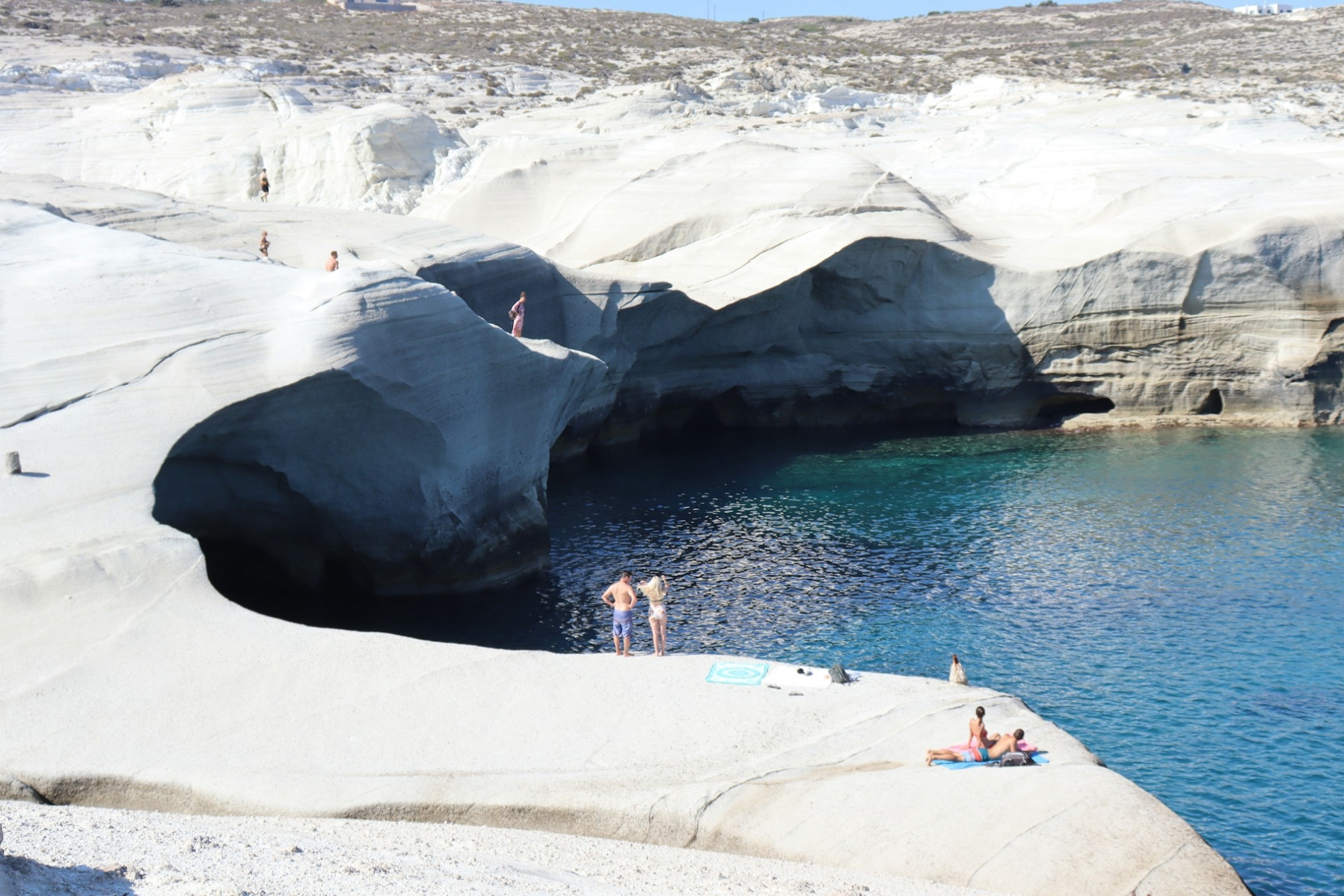
In the Northeast part of the island, you will find the most photographed Aegean landscape: Sarakiniko. This moonscape is unique.
The volcanic eroded Rocks penetrate into the emerald-colored sea creating small and big caves, whereas the lack of green (vegetation), in combination with the rocks’ white color and the intense reflection of the light create a landscape similar to the moon’s surface, thus making this experience unforgettable for all of its visitors.
Sarakiniko, named after the Saracen pirates overlooks Sifnos and Kimolos and it is recommended you visit it when the wind is not north.
It is worth noting that you should also visit Sarakinino at night, especially when the moon is full, as the snow-white rocks of soft material reflect the light even the moonlight vividly, thus, creating an unforgettable landscape.
Source: Municipality of Milos
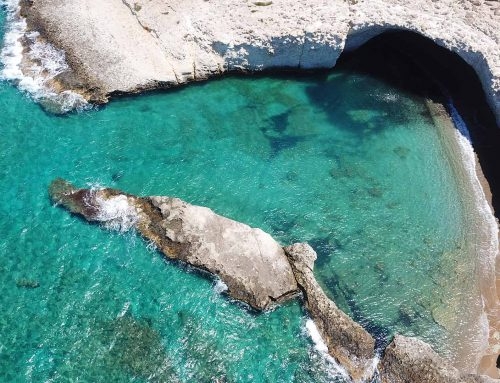
Alogomandra
The ground is rocky on the sides and the green-blue waters are shallow. The beach formation resembles a yard and that why is was named “Alogomandra” (mandra=yard).
Source: Municipality of Milos
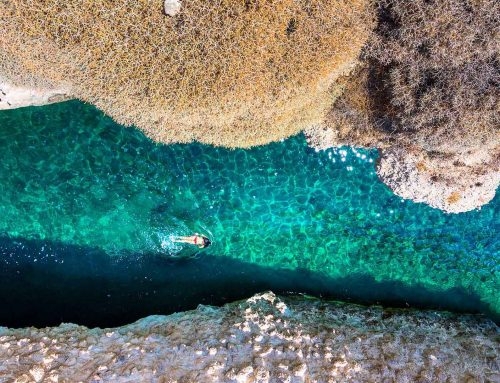
Papafragas
The cavern of Papafragas is a deep sea cave, where you can swim in green-blue waters between white-grey rocks leading to the open sea. The beach is small in size, surrounded by the gigantic, light-colored rocks and in order to get there you will have to go down a steep carving on the rock. In Byzantine times, it was used as a hide-out for pirates and it was named after the last Frank Pope who used the beach to protect his boat.
Source: Municipality of Milos
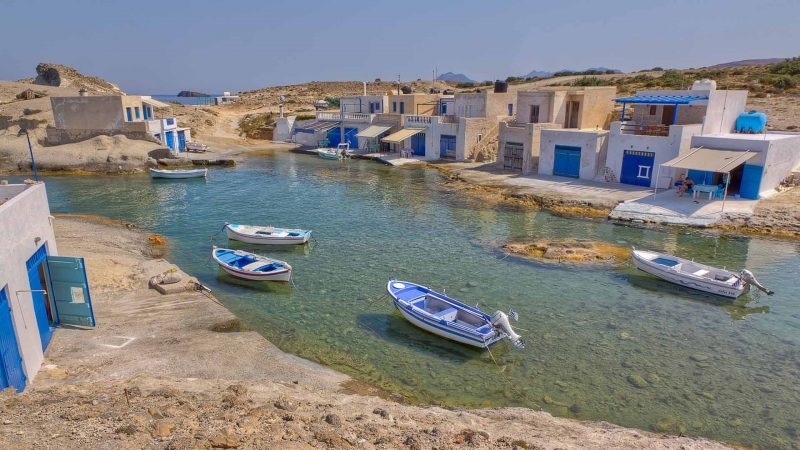
The settlement’s beach is quite beautiful and quiet, on its right side among the rocks two small caves are formed from where the waters come in and out and which are certainly worth exploring.
Source: Municipality of Milos


